Why It Matters
As you engage in the game of basketball, you can quickly come to feel like you know the rules.
But The Rules Aren’t Always Obvious
Here are two good examples:
The defender may sprint alongside the ball handler or jump straight up while guarding someone. This does not give the ball handler license to ram into the defender.
NBA references: Comments on the Rules—Guarding an Opponent; Rule No. 12—Fouls and Penalties, Section II: By Dribbler; NBA Rule Authority, Restricted Area and Verticality Plays.
While dribbling from the backcourt, the ball does not gain frontcourt status until both of the dribbler’s feet and the ball are all in the frontcourt at the same time. Until then, the dribbler may step back and forth across the halfcourt line without committing a backcourt violation.
NBA reference: Rule No. 4, Section VI(d), which requires “the ball and both feet of the player” to be in the frontcourt.
Most serious organizations like the NBA have two full books that the more serious officials study intensively:
- Basketball Rules Book — contains the actual rules.
- Basketball Case Book — provides specific play situations and official rulings that explain how the rules should be applied.
Knowing the Game Includes Knowing the Rules
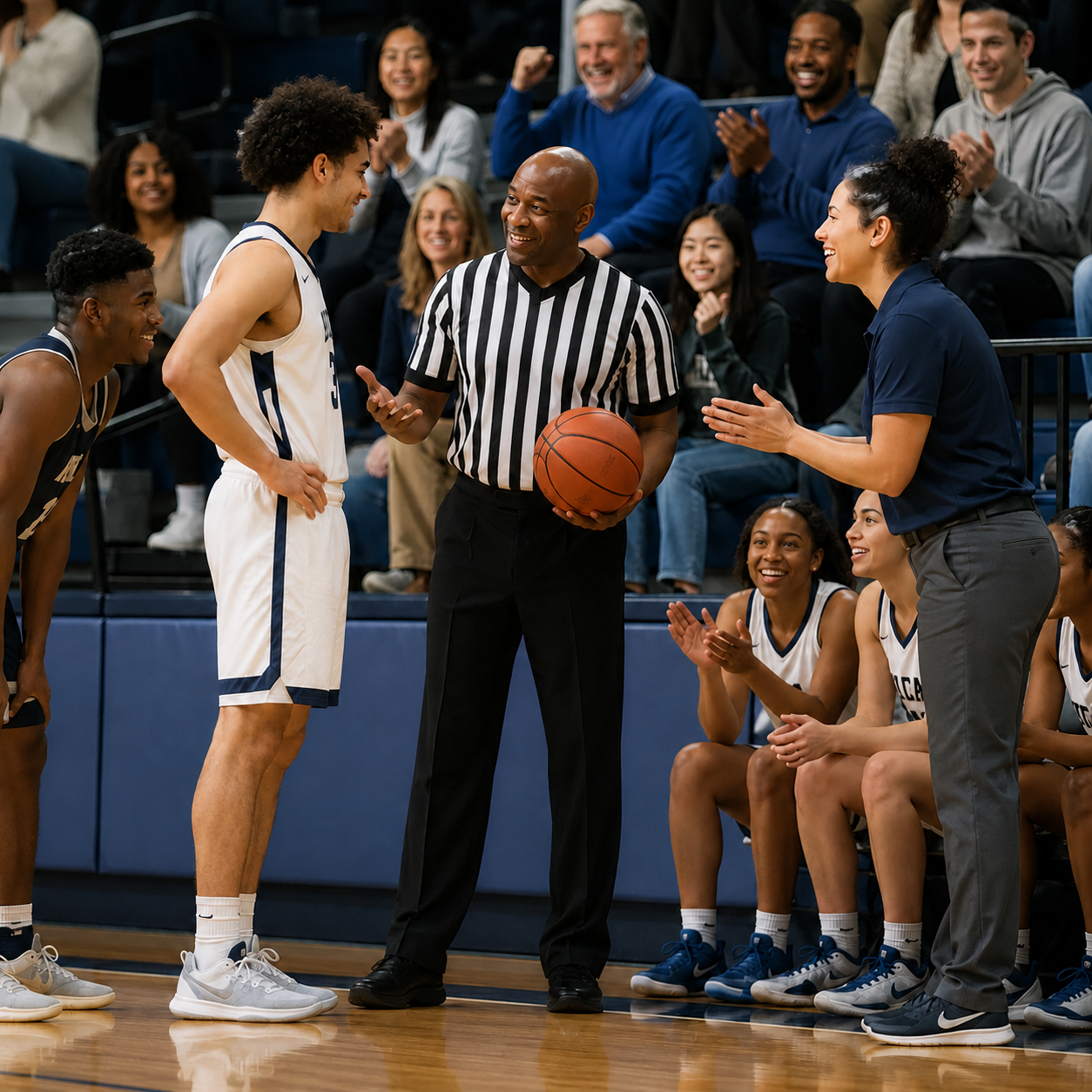
The physical skill, mental acumen, and athleticism displayed in quality basketball make it unique among competitive sports. The judgment, knowledge, and positioning demonstrated by quality officials is equally impressive. Together, players and officials create an exciting experience for everyone who loves the game. As players, coaches, and fans deepen their understanding of the rules, they can develop greater trust in quality officiating, with greater enjoyment of the game following.